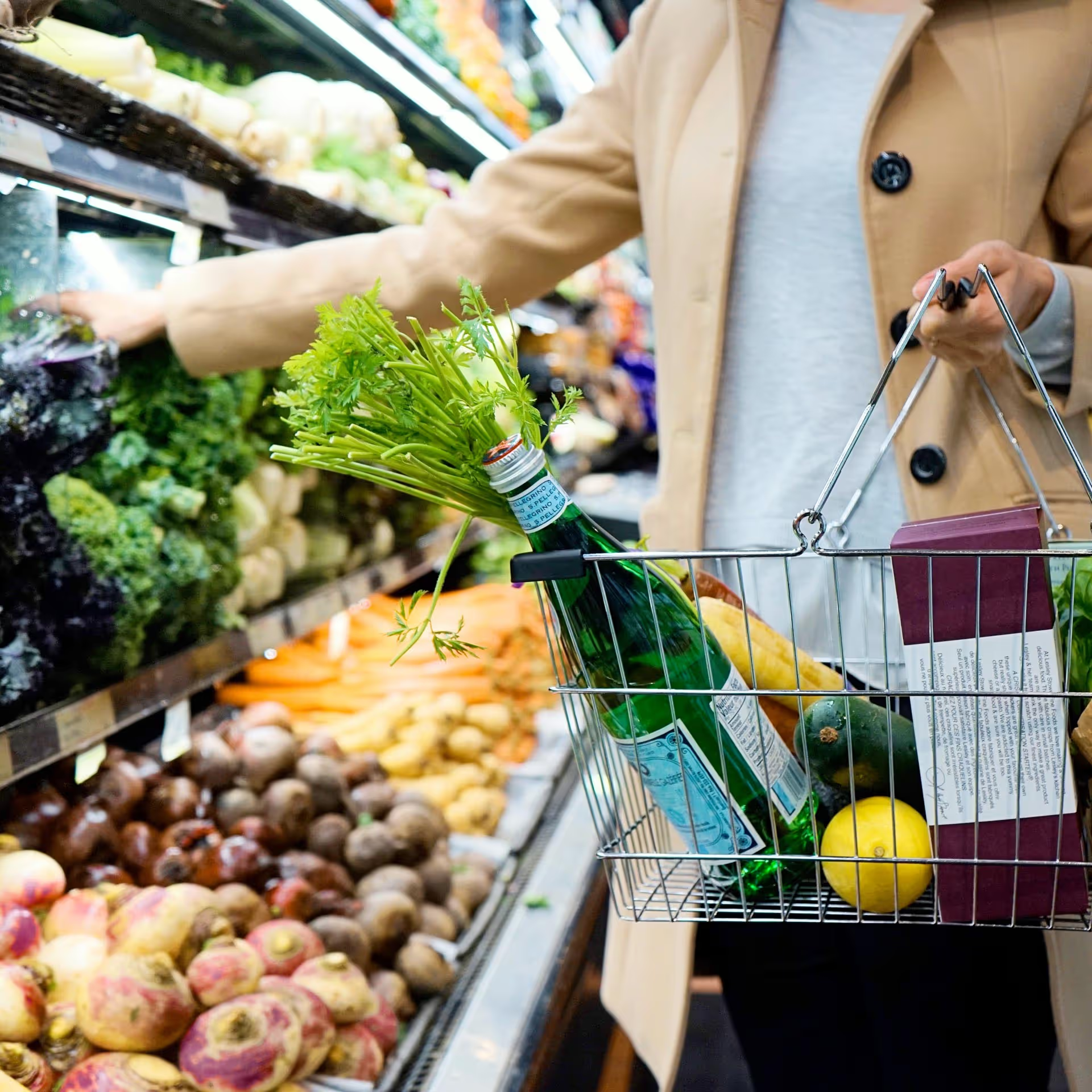

Health is no longer a niche concern.
Levercliff's latest UK Consumer Tracker found that 89% of UK adults have at least one health-related goal, making health one of the most influential factors shaping food and drink decision-making today. But the story goes far beyond healthy eating. Consumers are reassessing what healthy means, questioning how food is made, exploring new technologies and adopting behaviours that could reshape the food and drink landscape.
1. The Rise of Weight-Loss Medication Could Change Consumption Patterns
Weight-loss medications are moving into the mainstream.
The research found that 17% of UK households have experience of weight-loss medication, either personally or through another household member, up from 14% a year ago. Among consumers with a weight-loss goal, 53% would definitely or potentially consider taking a weight-loss drug, and 29% say they would be more willing to consider it if available in a pill format rather than an injection.
For food and drink businesses, the key question is not whether these medications are effective.
It's whether wider adoption could reshape portions, snacking occasions, product choices and ultimately category volumes.
2. Britain's Definition of Healthy Food Is Changing
Consumers increasingly define healthy food through the lens of:
• Minimal processing
• Naturalness
• Recognisable ingredients
Today, 54% of UK adults define healthy food as "unprocessed or minimally processed", up from 48% in 2025. Almost half (48%) associate healthy food with being free from artificial ingredients, preservatives or additives, while 45% say healthy food should be high in beneficial nutrients.
At the same time, traditional measures such as "low fat" (27%) and "low calorie" (17%) are becoming less important indicators of health.
This shift suggests that consumers are increasingly focused on how food is made, rather than just nutritional claims on pack.
3. UPFs Have Moved Beyond Awareness to Behaviour Change
Awareness of Ultra Processed Foods has reached 84% of UK adults, equivalent to around 45.5 million people.
More importantly, concern is translating into action.
The research found that 45% of those aware of UPFs have already changed what they buy or eat because of what they have seen or heard about UPFs, representing approximately 20.5 million UK adults. A further 26% say they would like to make changes, while only 23% say they do not plan to change their behaviour.
Consumers are seeking greater clarity around ingredients and processing, with 31% saying the biggest barrier to limiting UPF consumption is simply knowing which foods are UPFs and which are not.
For brands, the conversation around processing is increasingly becoming a conversation about transparency and trust.
4. Health Means More Than Weight
Weight management remains important, but consumers are increasingly pursuing broader wellbeing goals.
The most common health goals are:
• Lose weight (38%)
• Maintain a healthy weight (36%)
• Improve or maintain fitness (33%)
• Improve sleep or get more sleep (32%)
• Reduce stress or anxiety (31%)
Interest in gut health continues to grow. 31% of consumers say gut health is important to them, while the proportion identifying gut health as their single most important health consideration has almost doubled from 5% in 2025 to 9% in 2026.
Consumers are also making connections between gut health and wider wellbeing outcomes. More than half (55%) associate good gut health with improved digestive health, while many also connect it with immunity, energy, metabolism and healthy weight management.
Health is becoming broader, more holistic and increasingly personalised.
5. AI Is Becoming Part of the Health Journey
AI is beginning to influence how consumers make food and drink decisions.
The research found that 22% of UK adults now use AI tools such as ChatGPT, Copilot or Gemini to help with food and drink choices, equivalent to approximately 11.9 million people.
Among those using AI:
• 44% use it for recipe ideas
• 40% use it for meal planning
• 35% use it to seek advice on foods that support health goals
• 33% use it to understand nutritional information
• 21% use it for product recommendations
• 20% use it for brand recommendations
As AI adoption grows, brands may need to think differently about how consumers discover, evaluate and ultimately choose food and drink products.
The Big Takeaway
Health is increasingly influencing food and drink choice.
Whether through the growing use of weight-loss medication, changing perceptions of processing, rising interest in gut health or the use of AI to support food decisions, consumer expectations continue to evolve.
The most successful brands are likely to be those that understand these shifts and recognise that health today is not defined by a single trend or goal. It's a broad and evolving lens through which consumers are making food and drink decisions across every category.
Download the latest Consumer Tracker
This edition of the Levercliff UK Consumer Tracker provides evidence based insight into how UK shopper attitudes are changing, and what this means for innovation, brand and category strategy.
Download the full report to explore the findings in detail.

.png)

.avif)

















.jpg)