
Walk through any supermarket and you'll see protein everywhere. The food and drink industry is responding to the seemingly insatiable consumer appetite for protein.
From a consumer insight perspective, what's interesting, however, is that this demand is not necessarily being driven by nutritional deficiency.
Although needs will vary by age and activity level, on average UK adults are eating more protein than required. Consumers appear more focused on increasing protein intake than addressing nutrients that are more commonly lacking in their diets, such as fibre.
Research suggests that only around 4% of UK adults are meeting the recommended fibre goal (30g), with most only achieving just over half of this level (NDNS). Similarly, less than 1 in 5 adults (17%) meet the five a day recommendation for fruit and vegetables.
Why?
Because many consumers don't make food choices based on nutrient gaps. Consumer behaviour is often driven by personal goals rather than nutritional need. They make choices based on outcomes they value.
For category managers and food manufacturers, protein has become a powerful symbol of personal outcomes people care about: strength and fitness, weight management and energy. Ultimately, for many consumers, protein is the nutrient that helps them look and feel better. It is one of the few nutrients that consumers can directly connect to tangible benefits that can be seen and felt.
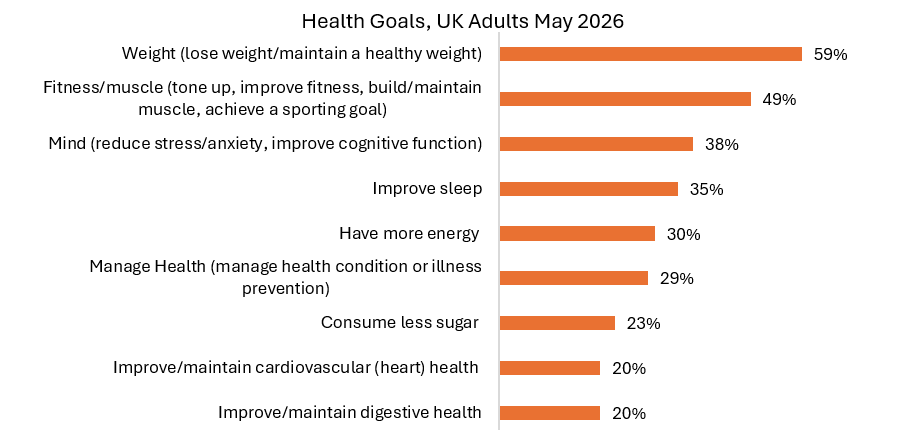
What learnings can food and drink brands, category managers and product development teams take from this when marketing products focused on other nutrients such as fibre?
The challenge for brands is to answer the consumer and shopper question of "who does fibre help me become?" rather than "why is fibre good for me?". The opportunity is to focus on the aspirational rather than operational nature of the nutrient.
For fibre and other under-consumed nutrients, the need is not to educate consumers about the science. It is to create compelling links between the nutrient and outcomes people can see, feel and aspire to achieve. This is where consumer insight and shopper insight can play a critical role, helping brands understand the motivations that sit behind food choices and identify the benefits that resonate most strongly with consumers.
Please get in touch if you would like to discuss how our category management, consumer insight and shopper research expertise can help you apply these learnings to your category strategy, innovation pipeline or retail growth plans: hello@levercliff.co.uk

.png)

.avif)


















.jpg)